TexasTriangle Twitter Feed

    follow me on Twitter

    Wednesday

    Innovation Clusters Round-up

    1. Venture Capital Hubs> Fascinating Harvard paper on VC clusters, DFW ranked 6th, down from 1990 peak, ATX not ranked.:. http://bit.ly/2hG3rz
    2. Top 10 Nano Metros> ATX and Houston rank 9th and 10th among nanotechnology cluster cities .:. http://bit.ly/DUtCC
    3. Small is Big> Texas ranks 4th in nanotech among states, PDF of nanotech resources here.:. http://bit.ly/YLEIz
    4. How much the Apollo Program would cost today .:. http://bit.ly/U0nw9
    5. Tech Empires> Rome wasn't built in a day, neither are technology powerhouses .:. http://bit.ly/3Q1xuK
    6. IPOs in the Lone Star> How Texas stacks up in public offerings over last 10 years .:. http://bit.ly/qMYlb
    7. Arcologies for Innovation> Nations invest big in research & tech parks to attract corporations .:. http://bit.ly/1oTWPu
    8. Creator Class> Film-maker Mike Judge and who Butt-head really was based on .:. http://bit.ly/OCBw0
    9. Aerospace Clusters> #AlamoCity fights for aerospace work, borne of Air Force presence, plenty of competition .:. http://bit.ly/AFDSe
    10. Cluster Power> How a small California #industrycluster gave rise to the Information Age .:. http://bit.ly/D4hyv
    11. Physicians heal themselves > Houston Medical Center giants seek to mend past wounds, bring back breakthroughs.:. http://bit.ly/4ToXI
    12. Think Different> Richard Florida tells Fort Worth to get creative to prosper .:. http://bit.ly/6PYRu

    Name of the Rose

    San Diego's biotech cluster attracts hungry law firms, with mixed-results

    Good article by Kellie Schmitt of The Recorder, posted to Law.com on June 11. "All's Not Sunny for San Diego Firms" provides an interesting look into a changing business ecosystem, from the standpoint of big corporate law firms.

    Lawyers along with investment banks, advertising agencies, accountants, management consultants, and real estate brokers, form the core of the advanced services sector that provides the know-how to power modern enterprises.

    In San Diego, law firms saw the rising of a biotech mecca. Parallels to Silicon Valley abound. Start-up activity is even concentrated in a place called Sorrento Valley. However, just as every business plan looks good on paper, law firms are finding stiff competition that makes San Diego not the Shangri-La they anticipated.

    The region once had just two big law firms, but those firms have been absorbed by larger players. Big law firms from Los Angeles, to the north, moved in the 1980s and maintain large offices there now. Northern Californian firms, bringing the cache of Silicon Valley with them, also moved in. Plus other big players from across the country have sought to establish a foothold.

    [Money quote by Frederick Muto, the partner in charge of the San Diego office of Cooley Godward Kronish, noting that competitors "see our success and say, 'There's the next Silicon Valley,' but there's only one Silicon Valley."]

    One key problem includes a small pool of qualified talent. Apparently lawyers are jumping ship-to-ship-to-ship-ship, transferring from one firm to the next in a series of lateral hires, as the practice is known in the legal industry. Additionally, there are few large companies, and many small ventures--startups that can't afford the $500- to $600-an-hour billing rates of big law firms. And more big law firms are on the way, leading observers to predict a shake-out is eminent. GEO

    Friday

    View from the Inside

    Influential bloggers calls for downturn in Silicon Valley

    Web 2.0, as the recent surge in Internet ventures has been termed, is re-igniting the innovation engines in Silicon Valley. But not everyone is happy with that.

    Utilizing a new, flexible but powerful compilation of software programs, termed AJAX, new companies began popping up a few years ago. Michael Arrington, created a blog in 2005 called TechCrunch.com, to cover the then burgeoning trend. With insider insights and interesting companies to write about, TechCrunch became a massive hit and can claim close to 500,000 visitors a day.

    On May 22, however, Arrington wrote that he missed the old days, circa 2004, where burgers, beer and backyard parties offered the setting for entrepreneurs to network. No longer is that the case. Easy capital has changed everything, he intones. Put another way, Web 2.0 has jumped the shark. [Money quote: "Times are good, money is flowing, and Silicon Valley sucks.” ]

    He suggests Silicon Valley needs a good downturn to set things right again. Strangely, another blog superstar Robert Scoble, followed up with his own similarly-themed post "Why I'm in a malaise ..." [Money quote: "I too look wistfully back at the days when we had almost the entire Social Software industry in one little coffee shop back in 2002 — none of whom were talking about making billions of dollars. "] It's a strange call to arms, to be sure, but the insights they provide offer an insider's look into a boom as ownership is transferred from the innovators to the exploiters. GEO


    Capitals of Clean

    Regions vie for clean tech crown

    Several months after The New York Times ran its piece , on May 24th, the Wall Street Journal offered its own take on Silicon Valley's drive to become the clean technology capital.

    Although not news anymore, WSJ writers Pui-Wing Tam and Jim Carlton authored a more balanced piece on the subject.

    NYT slanted its piece as if Silicon Valley's dominance is a foregone conclusion, but WSJ clearly spelled out the Valley has plenty of competition: particularly from Austin, Texas. Even citing a study by an independent research firm, SustainLane, in San Francisco ranking Silicon Valley, gasp, #2 behind Austin. (Click here for Google Map.)

    The story was also more detailed, honing in on San Jose (the 1M person capital of Silicon Valley) and its efforts to lure a start-up solar power company called Nanosolar, Inc. Salient points: San Jose city officials scouted sites for a 647,000 s.f. building to save Nanosolar on real estate broker fees, offered expedited permits, and provided a $1.5 million grant to be used to retrain local workers. All of that to attract a facility that will create 200 jobs, which will hopefully grow.

    Still, the article points out that San Jose is an expensive place to startup a business: average salaries are twice the national average ($66,200 v. $37,870) and other items, such as electricity costs, are high. However, there's plenty of money thanks to VC-extraordinaire John Doerr of KleinerPerkins, who's pushing clean tech. (Check out the excellent new Portfolio magazine for a profile of Doerr's efforts. Money quote: “When you get into energy, you’re going up against Exxon and Chevron and cattlemen and corn.”) And local techies like Google co-founders Sergey Brin and Larry Page are putting their own money into outfits, such as Nanosolar (which has raised $100M to date).

    So far, reports the article, San Jose has 22 firms involved in researching and producing clean tech, an 83% jump from last year. One of which, SunPower Corp., has 300 employees and plans to double that workforce by the end of 2007. Austin, however, claims 50 such companies.

    Other top spots for clean tech, according to SustainLane, include: Berkely, CA; Pasadena, CA; Boston, MA; and runners-up San Francisco, New York, Seattle, San Diego, and Houston. GEO

    Thursday

    Brainy Burgs

    New research on why some cities thrive in the knowledge economy

    The Work Foundation out of the U.K., today announced the start of phase II of its research into so-called knowledge cities, aka Ideopolises. The phase I findings are availalbe in a 108-page report.

    That initial report states that Ideopolises are characterised by:

    • High levels of economic success
    • High levels of knowledge intensity based on The Work Foundation’sdefinition of knowledge intensity
    • A diverse industry base including distinctive specialist niches
    • One or more universities that have a mutually beneficial relationship withthe city, leading to industries built on research strengths, transfer ofknowledge to businesses and the retention of graduates
    • Strong communications infrastructure and good transport links withinthe city and to other cities, including by air, rail and road
    • A distinctive long-term ‘knowledge city’ offer to investors and individuals alike, created by public and private sector leaders
    • Strategies to ensure that all communities benefit from the economicsuccess associated with knowledge.

    According to Alexandra Jones, associate director at The Work Foundation, this new round of research will "examine in detail how cities can play to their strengths against this background - how they can build a sense of place and a distinctive offer for their citizens, how they can collaborate with other cities, and how they can foster multi-agency working to achieve their goals." GEO

    Wednesday

    Oil Boom Towns

    Black gold buys metropolitan status

    The Wall Street Journal reported on April 11, 2007, that a plan was unveiled for a 68-story skyscraper in Dubai where each floor rotates every 90 minutes. The architect, David Fisher, calls it "dynamic architecture." The newspaper reported that Fisher's eureka moment came as he listened to a friend in Florida talk about the large difference in pricing for condos that face the ocean and those that do not.
    Fisher's design team includes Leslie Robertson, the innovator behind the World Trade Center design. Interestingly, the designers don't seem to anticipate large construction costs, and argue their design is rather straightforward, it just looks different. All except the all important issue of plumbing. WSJ quotes Robertson as saying, "We have good people working on that." Indicating, in as many words, that it's a technical challenge.


    Dubai Marina at night.


    The fact that the designers are targetting Dubai, one of the 7 emirates of the UAE, is a reflection of the building boom going on in the tiny Middle Eastern nation. Understanding that oil wealth will not last forever, the country's ruler Sheikh Mohammed bin Rashid Al Maktoum is looking to shape Dubai into a world financial center, and tourist haven.
    The country is set to debut the region's first commodities futures exchange, in a joint venture with NYMEX. The commodity the so-called Dubai Merc will focus on first is, of course, oil. Specifically, the Dubai Merc hopes to become a trading center for Arabian Gulf sour crude, the flavor of oil that makes up much of the world's energy markets. Already Dubai crude is a benchmark for Middle Eastern oil flowing to the Asia-Pacific region. In contrast, NYMEX in the U.S. has a huge market based on setting prices for benchmarks Brent crude (from the North Atlantic Sea) and West Texas Intermediate (from West Texas).
    To house its burgeoning non-petroleum industry, the country is undergoing a building boom. [Emporis lists 1,087 buildings in Dubai.] It is in the process of building what will be world's largest building, the Burj Dubai (2,300 feet tall; ETA: 2009), and is planning another building known as "The Burj," meaning "the tower" which would be 3,281-feet tall, or 1 kilometer!
    Just 90 miles away from Dubai another boom town is forming in Abu Dhabi, a fellow UAE member.
    With a similar story to Dubai, Abu Dhabi also hopes to become a regional hotspot. A Fortune Magazine article recently named Abu Dhabi the "richest city in the world." [Author: Barney Gimbel] The reason: Abu Dhabi's 420,000 citizens, excluding foreign workers, have an average net worth of $17 million each. [Emporis lists 215 buildings in Abu Dhabi.]
    Just 15 minutes away from one another by plane, Fortune article points out a friendly rivalry between Dubai and Abu Dhabi. So far, however, Dubai has won the public relations campaign, drawing the bulk of recognition. And in March 2007, Halliburton, famous/infamous for its Vice President Dick Cheney affiliation, announced it would move its corporate headquarters to Dubai--although its 12,000 workers at its current HQ in Houston, Texas, would stay put. GEO

    Rapid Manufacturing

    Just press CTRL+P for a new home

    Discovery News reported recently on an outfit in the U.K. that's hoping to build a system that will "print" an entire room of a house.
    The process uses techniques from the rapid prototyping industry, which allows engineers and designers to convert CAD drawings into 3D plastic models.
    A leader in rapid prototyping is Stratasys, based in the Minneapolis suburb of Eden Prairie. (I wrote an article about the company back in 2005.) Publicly traded, Stratasys has been in rapid prototyping for many years. The founder & CEO Scott Cramp developed a prototype for his first machine working in his spare time from home.
    Ultimately, Cramp sees rapid prototyping evolving into rapid manufacturing. To that end, Stratasys began working with NASA to put a machine on the International Space Station that can print out replacement parts in supertough polycarbonate plastics or other plastic materials. Like in Star Trek, NASA will be able to "beam up" plans for the required parts, that will then be produced in situ.
    Back then rapid manufacturing was already happening. Just down the road from Stratasys, in fact. Eden Prairie-based company, MTS, had a subsidiary called AeroMet Corp. that used Stratasys software in a process it calls laser additive manufacturing. Using a laser and powdered metal, AeroMet can build structures up to 12 feet long that can be aerospace grade quality. (MTS closed down the operation in 2005, however.)
    Stratasys is now in the rapid manufacturing business through a license technology that produces metal parts. The company calls the process "direct digital manufacturing."
    So given all that development, it doesn't seem crazy that this U.K. firm is looking to use mineral-based construction materials to build a room one layer at a time.
    The article reports: "The machine will either squeeze out the moist material like toothpaste from a tube or it work like a large ink-jet printer head to place drops of the material in the precise location. The material will be designed to harden in the air and will not require a laser to fuse the layers together.
    Such precision will allow designers to incorporate elements into walls that would otherwise have to be built in separately. For example, the walls could have holes to accommodate doors and windows. They could be built with a honeycomb structure for insulation. Or they could contain hollow sections that serve as conduits for piping or electrical wires."
    It opens up new ways of thinking about home construction, which could impact tomorrow's suburbia. GEO

    Tuesday

    All the World's a City

    Is skyfarming the wave of the future?

    After last month's fascinating article comparing London and New York, New York Magazine does it again with another mind-opening story on "vertical farms." That is, using skyscrapers as centers of agriculture.
    The NY Mag article cites Columbia professor Dr. Dickson Despommier, who says within 10-15 years a "supergreen," 30-story skyscraper could be built that produces fruit, vegetables, and grains while generating clean energy and purifying waste water. He figures 150 such vertical farms could feed the population of New York City proper (~8 million people), about 55,000 people fed per building.
    (Similar ideas have long been proferred by advocates of space exploration, who have done endless calculations to prove that giant space stations could grow and feed city-sized populations in orbit around the Earth.)
    That's a lot of construction, but according to Emporis, NYC currently has 5,560 high-rise buildings within its 800 square kilometers of land area. And 120 more are under construction, with 120 in the planning stages.
    The professor says vertical farming would be able to feed the estimated 9.3 billion people expected to populate Earth in 2050, without using up more land area.The magazine suggests that the land requirements to feed the increase in world population (which now stands at about 6.2 billion) will require cultivation of a landmass area as large as Brazil." And with an estimated 80% of the world's population expected to live in urban areas by 2050, which works out to 7.3 billion citydwellers, why not grow agriculture where it is consumed? GEO

    Friday

    Emerging Clusters

    Government outsourcing cluster develops outside D.C.

    WSJ (March 30, 2007) highlights the growth of a new industry cluster in Northern Virginia. The newspaper notes that federal procurement money for work performed in Fairfax County, Va., has risen from $10 billion to more than $15 billion since 9/11. And Tyson's Corner, previously a small town halfway between Washington, D.C., and Dulles Airport, has benefitted.

    "Once known mostly for its shopping malls, it's now a land of glass towers, manicured office parks and Tiffany boutiques, where private-sectorbudget analysts, project managers and highly paid executives do the work that clock-punching civil servants in downtown D.C., 10 miles to the west, can't do."

    The town has attracted large firms, such as Booz Allen. The $4 billion firm formerly focused on providing management consulting to New York City-based corporation chieftains, but now derives half its revenue from government work. The effect is so pronounced, WSJ calls Tyson's Corner a "Mecca" for government outsourcing.

    It's interesting to note the increasing use in U.S. media of the word "Mecca" to describe what amount to clustering. When large-scale human endeavors become geographically concentrated, from a cultural point of view, the zone where the activity takes place becomes a common point of reference for all parties engaged in the enterprise. From a physical point of view, such concetrations become hubs for related activities.

    Urban economists use the term "agglomeration economies" to describe the efficiencies that follow from locating within the zone. Silicon Valley is the perfect recent example. The region known as Silicon Valley today began as an outpost for computer chip makers in the 1970s.

    Growing from that base of knowledge, additional information technology firms sprouted up, such as computer and networking hardware makers. The wave after that was computer software. And following that, Internet technology. Silicon Valley is the acknowledge world leader in those areas.

    Today, "Silicon Valley" and "Mecca" are becoming almost synonomous. (The connections are more than figurative. Academics have pointed out that for some technology has become a religion.) And "Silicon Valley," like "Mecca," is now shorthand for what amounts to the clustering process. So much so that regions around the U.S. and around the world seeking to emulate the economic development process, began by emulating the name resulting an abudance of imitators. Here's a few taken from the Siliconia, which provides an exhaustive list:


  • Silicon Alley (New York City, new media)
  • Silicon Prairie (Austin, Texas or Chicago)
  • Silicon Forest (Pacific Northwest)
  • Silicon Beach (Santa Barbara or Florida)
  • Silicon Wadi (Israel)
  • Silicon Triangle (Raleigh-Durham-Chapel Hill)
  • Silicon Tundra (Ottawa, Canada)
  • Silicon Alps (Austria)
  • Silicon Bayou (Louisiana)
  • Silicon Desert (Phoenix)
  • Silicon Bog (Ireland)

  • Since the end of the boom, these silicon appellations have become fodder for jokes and derision, but the original Silicon Valley remains.

    The flipside of agglomeration economies are agglomeration dis-economies. Boom towns, since times imemorial, have led to inflationary pricing of local goods and property, increased traffic and congestion, and, often, higher crime.

    The WSJ article on Tyson's Corner highlights this in its concluding paragraph: "The one drawback is the traffic. 'We work 7 a.m. until 4 to avoid the worst of it,' says Judd." GEO

    Thursday

    Profit Takers, Job Makers

    P.E. in full effect

    Private equity firms (both VC and BO) are not, apparently, barbarians at the gate. Management consulting firm A.T. Kearney analyzed performance from its database of more than 30,000 companies to determine whether private equity (including venture capital and buyout firms) results in job loss or job creation.

    The answer, according to A.T. Kearney, is that private equity creates jobs. A good synopsis is available from Dan Primack at PEhub.com. He links to the study, which you can also access directly by clicking here. GEO

    Friday

    Silicon Steppes

    Russia's high-tech hotspot on the move

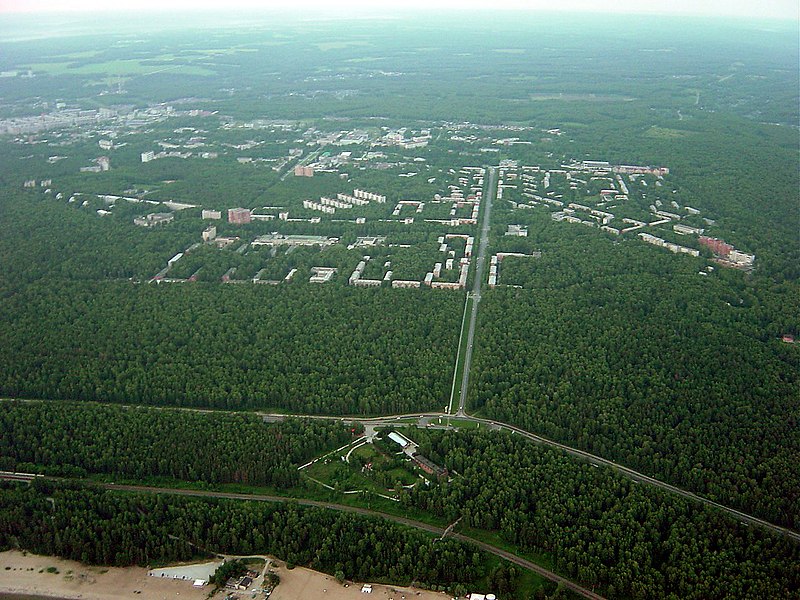
    Although Siberia is known only for its frigid temperatures, Akademgorodok, a suburb of Novosibirsk, a 1.4 million metroplois, has become a high-tech hotspot, The Wall Street Journal reported on March 21, 2007. [Here's the original Fortune Magazine article on which WSJ based its precis.] Following the fall of the Berlin Wall, the city fell on hard times in 1990s. "For 30 years, the city led the Soviet Empire's forays into fields ranging from nuclear physics to genetics," the Journal describes. The scientists, ever the problem solvers, got practical, and it is reported today that Akademgorodok is bustling, with the high-tech companies growing by 15% a year.


    Aerial view of Akademgorodok from the Wikipedia.


    Akademgorodok, which translated means "Academy Town, was created in 1958 by then-Premier Nikita Kruschev. It is located 20 miles from Novosibirsk, currently Russia's third largest city, and the capital of the Siberian region. The Soviets, with their centralization and top-down planning, may not be excellent examples of how to build centers of innovation and productivity, but they did understand the value of cities.

    Akademgorodok was one of many purpose-built cities in the former Soviet Union. (Another is Zvyozdny gorodok, aka Star City, the center for Russia's cosmonaut training outside Moscow.) Interestingly, its creation was authorized by Nikita Krushchev, who understood the tangible and intangible values of cities.
    It was Krushchev, afterall, who utilized the city of Stalingrad as a strategic propganda weapon against Nazi Germany. He was instrumental in making the Battle of Stanlingrad a rallying point for the Soviet Union, which was suffferingly badly against Nazi Germany. Krushchev, a high-ranking zampolit, countersigned the in/famous order stating "Not another step back," which order the political officers to shoot anyone who retreated (horrificly portrayed in Enemy at the Gates).


    Named for the USSR's supreme leader, Josef Stalin, the city was a natural focal point for Soviet war efforts. (The city's resistance also protected the very real strategic oil resources of the Caspian, which the Germans desperately needed.) Chancellor Hitler seemed willing to oblige, possibly also sensing the potential propaganda dividends. Ultimately when the Soviets launched a surprise winter offensive and retook Stalingrad, it was the beginning of the end for the Germans on the Eastern front.

    Picture of Battle of Stalingrad from Wikipedia.

    Not coincidentally, Vasily Ivanovich Chuikov, the general who led the military defense of Stalingrad, was given the honor of commanding the Soviet troops that razed Berlin and ended the war in Europe. (Later Chuikov served as Chief of Civil Defense from 1961 to 1972, a role taken more serious by the Soviets during the Cold War. Just witness the Arbatskiy line of the Moscow metro, which was buried deep enough to survive a nuclear war and requires a harrowing escalator ride down.) He was then buried at the Mamayev Kurgan monument in Stalingrad--the first Soviet Marshal to be buried outside of Moscow.

    And Krushchev, having masterminded the creation of the Stalingrad mythos, deconstructed it. As part of his reforms to erase "stalinism" after taking power, the city was renamed Volgograd in 1961. (Today it's a major city of 1 million plus residents situated on the west bank of the important Volga River.)
    With "picking winners" being a major fear of regional economic developers and a criticim often leveled against them, it's important to remember cities are not natural resources but manmade ones. Like a bronze axe writ large, cities are macro-artefacts manufactured by human civilizations. In other words, they are designed to serve a practical purpose. GEO

    Blog Archive